
Massive increases in rural living post pandemic
Why more Australians are choosing rural living
Rural living is increasingly becoming more attractive to many Australians who are looking for a change of pace, a closer connection to nature, a lower cost of living, and because of recent events; less government interference into their lives.
According to census data, the population of rural and remote areas increased by 6.6% between 2011 and 2016, compared with 10.5% for major cities. This suggests that more people are moving to or staying in rural and remote areas, rather than migrating to urban centres.
The years 2016 to 2020 showed these trends growing slightly but nothing remarkable. When considered alongside the ever high metropolitan house and rental prices it is suprising that the figures were so stable.
In 2020 and 2021 the Australian population fell although the numbers are not published, possibly not properly doccumented. This was due to a combination of aussies becoming 'locked out' of the country, and migrants leaving for less tyranical homelands. Melbourne and Sydney suffered large losses as families moved interstate because of the draconian and endless government lockdowns.
In 2022 the population movements around the country are very interesting. The Australian Beurau of Statistics indicate that the combined growth of all capitol cities was 1.2% and was identical for the regions. This indicates a significant drop in the numbers moving to rural areas, which i know to be incorrect. However, I think that when the numbers are revised over time, the figures for regional australia will increse. There is a definate demand for rural properties across the board, and a marked increase in the amount of rezoning and subdividing being done in these rural areas, to accomodate the demand for residential blocks as people flee the cities.
But what are the benefits and challenges of living in rural and remote Australia? Why are so many people willing to ' give it all up' for the simple life?
Benefits of rural living
· Lifestyle: People who live in rural and remote areas enjoy the slower pace of life, the sense of community, and the opportunity to pursue hobbies and interests that may not be possible in the city. For example, many people enjoy growing their own clean fruit and vegetables, rearing a small amount of livestock, such as chickens and sheep. A way of ensuring chemical free protein in their diet. Living in a more natural environment improves mental health as well as physical health. The improvements in technology and the internet have created a new classification of keyboard entrepreneurs, with so many of all ages working from home, they want a place they can enjoy more.
· Health: Living in rural and remote areas has many health benefits, such as lower levels of air pollution, noise pollution, less radiation from telecommunication towers and lower stress. People living in rural and remote areas have higher levels of physical activity, social support, and life satisfaction than those living in major cities. Health is the second most popular reason people give for leaving cities. Either vaccine injury, vaccine induced death of a close family member, or allergies are all stated as the tipping point for such a large lifestyle change.
· Affordability: Another advantage of rural living is the lower cost of housing, utilities, and goods and services. According to the Australian Bureau of Statistics (ABS), Australians living outside capital cities had, on average, 19% less household income per week compared with those living in capital cities, but also 30% less mean household net worth. This translates to more disposable income and less (if any) debt. A very attractive factor when you consider the tens of thousands of family business' that were destroyed by government lockdowns and restrictions.
Challenges of rural living
· Access: One of the main challenges of living in rural and remote areas is the limited access to health care, education, employment, transport, and communication services. People living in remote areas have to travel long distances or wait longer for appointments or deliveries. They also face barriers such as lack of availability, affordability, or quality of services For example, people living in remote and very remote areas were more likely to report lack of access to GPs and specialists than those living in Major cities. They also had higher rates of preventable hospitalisations and burden of disease than those living in Major cities. Rural residents also show a much higher resiliance to those issues than their city living counterparts.
· Isolation: A perceived challenge of rural living is the potential for social isolation, for people who are new to the area or have different backgrounds or lifestyles from the majority of the community. Some people may feel lonely, bored, or excluded from social activities or networks. They may also face discrimination or stigma based on their ethnicity, religion, sexuality, or disability. These factors may affect their mental health and well-being.
· Adaptation: A third challenge of rural living is the need to adapt to different environmental conditions and risks. People living in rural and remote areas have to deal with extreme weather events, such as droughts, floods, bushfires, or cyclones. They may also have to cope with pests, diseases, or wildlife that may threaten their crops, livestock, or health. Additionally, they may have to adjust to different cultural norms and expectations from their urban counterparts. Country people are generally tough and upfront, they tolerate and resolve situations that city folk could not. They also have a way of doing things that works and new people often find this apparent inflexibility difficult, especially if they are used to making a noise and forcing others to comply to their point of view.
If you have a rural property that you think may be suitable to rezone or subdivide, so that you can create ssafe haven for several families and a lump sum income for your own family call us now 08 9304 4741 or email us client@thewomandeveloper.com and lets have a chat about possibilities.

ABOUT
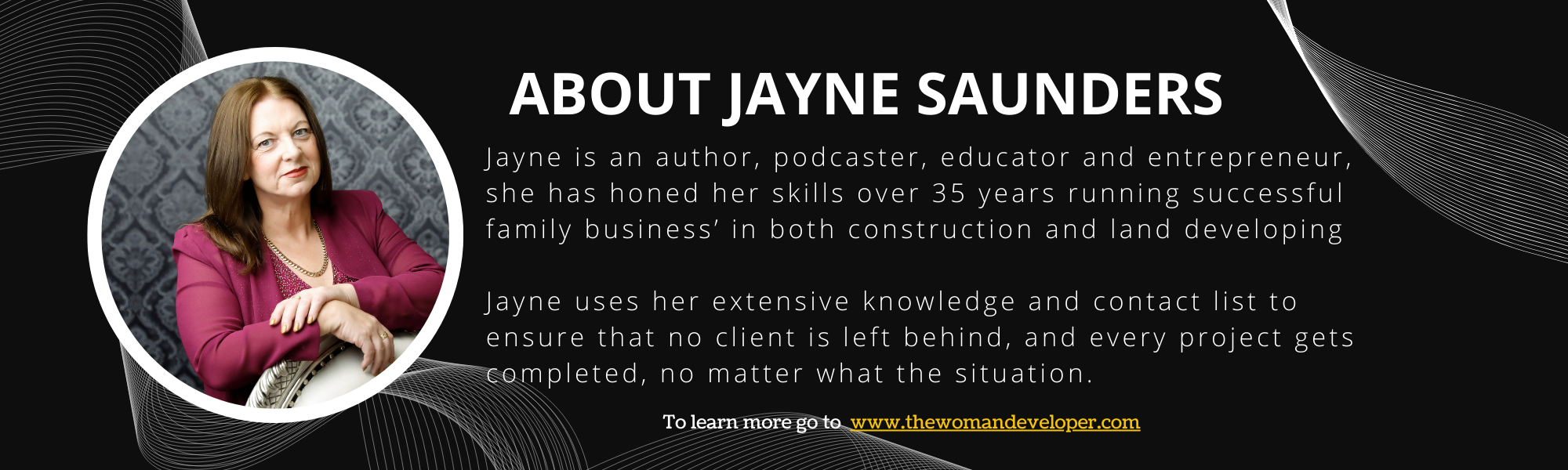
With 30+ years experience, Jayne is an industry leader with an extensive knowledge base, and is the face of this family business.
Created with © systeme.io
Follow us on socials


